Recliner, Bed or Wedge: Where Should You Actually Sleep After Shoulder Surgery?
Half of shoulder patients end up in an armchair for weeks. Here's an honest look at whether you need a recliner, what it costs to hire one in the UK, and how to get the same angle in your own bed.
Updated 2 July 2026 · 9 min read
Somewhere between the pre-op appointment and the operation, almost every shoulder patient has the same conversation with a friend or a forum: "You'll need a recliner. I slept in mine for six weeks." It's the standard advice, it's given in good faith, and it's only half right.
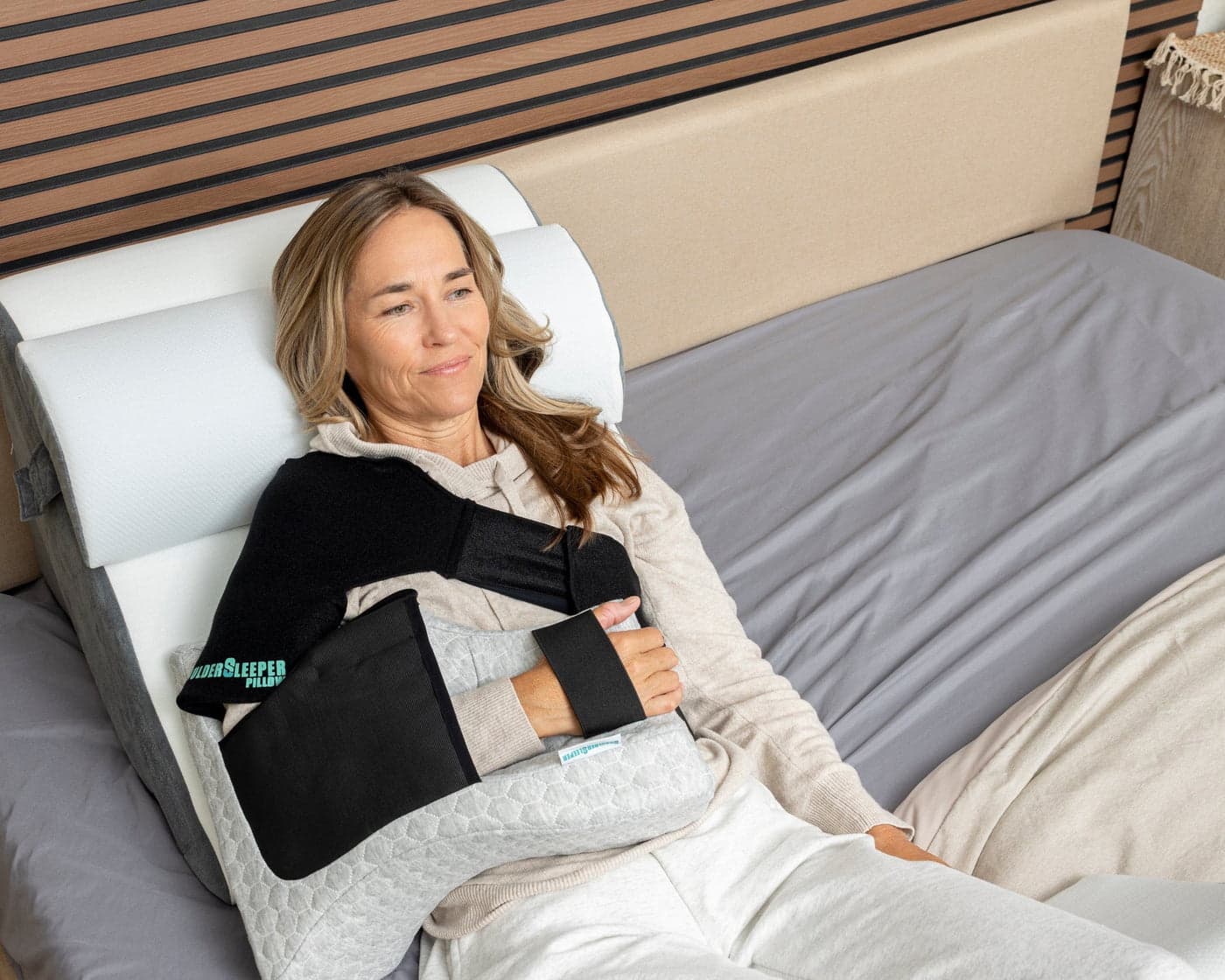
What a recliner gives you is a stable incline that doesn't collapse, and an easy way to get up without pushing off with your arms. Both matter enormously. But a chair isn't the only way to get them — and for a lot of people it isn't the best way.
Why you need to sleep propped up at all
Two reasons. First, elevation helps with swelling in the early phase. Second, and more practically: lying flat on your back lets the operated arm drift backwards, which puts tension on exactly the tissue that has just been repaired — and getting up from flat is a two-armed movement you're not allowed to make. Sleeping at an angle solves both.
How long you'll want that angle varies, but think in terms of the first several weeks, gradually lowering as comfort allows rather than a single day when you switch back to flat.
The three options, honestly compared
| Recliner armchair | Stacked pillows | Wedge system in bed | |
|---|---|---|---|
| Holds its angle all night | Yes — its main strength | No. This is the failure mode | Yes |
| Easy to get in and out of | Excellent, especially riser models | Poor — you're still in a bed | Good — you can sit on the edge and lower sideways |
| Sleep quality | Mixed. Many sleep well at first, then get stiff hips and back | Poor once the pillows shift | Usually best of the three once you're used to it |
| Cost | Hire cost per week plus delivery, or buy from several hundred pounds | Free (you own pillows) | One-off cost, and you keep it |
| Space needed | A whole armchair in your living room or bedroom | None | None — it lives on your bed |
| Sleeping next to a partner | No — you're in another room | Yes | Yes |
When a recliner genuinely is the right answer
- You already own one. Obviously. Use it, at least for the first week or two.
- You have trouble getting out of bed at the best of times — a riser-recliner does the standing-up work for you.
- You've had bilateral surgery or have other mobility issues, where the sit-to-stand problem outweighs everything else.
- Your surgeon has specifically recommended it for your procedure.
If you're hiring one
UK mobility hire firms rent riser-recliners weekly, usually with a delivery and collection charge on top and often a minimum hire period. Before you book, price the whole thing for the number of weeks you actually expect to need it — people routinely hire for four weeks and keep it for ten. Compare that against a wedge set you keep and can lend to the next person in the family who has an operation.
When your own bed is better
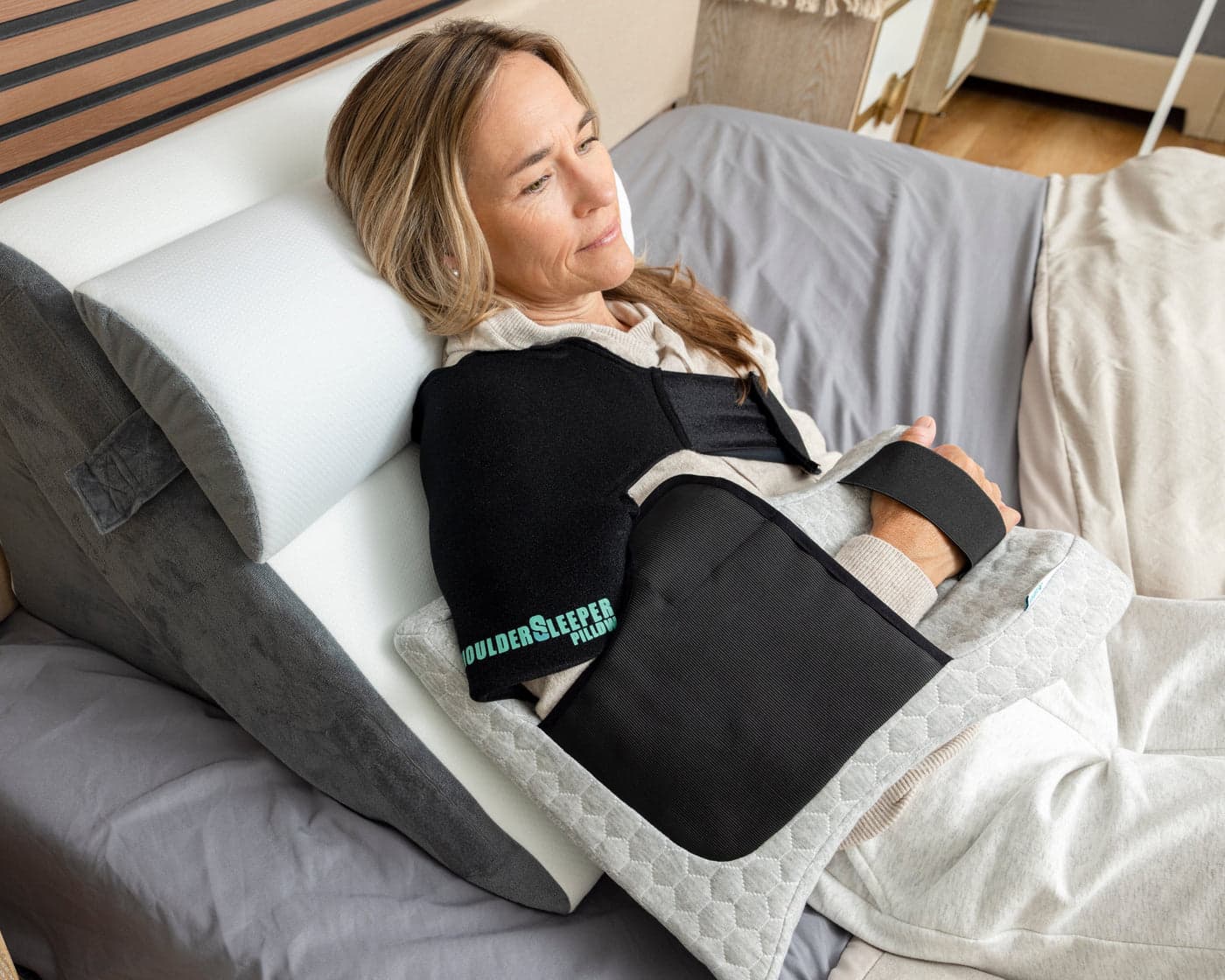
For most people having routine shoulder surgery, a properly set-up bed is the better long-term option — and "properly set up" is the operative phrase. The reasons patients give:
- You sleep better in a bed. Chairs are great for the first few nights and progressively less great as your hips and lower back object.
- You're not exiled from your bedroom — sleeping alone in the living room for six weeks wears on people more than they expect.
- You can lower the angle gradually as you heal, rather than making a single jump from chair to flat bed.
- It costs once. No return date, no delivery fee, no reminder in the hall that you're a patient.
Whichever you choose, the arm still needs support
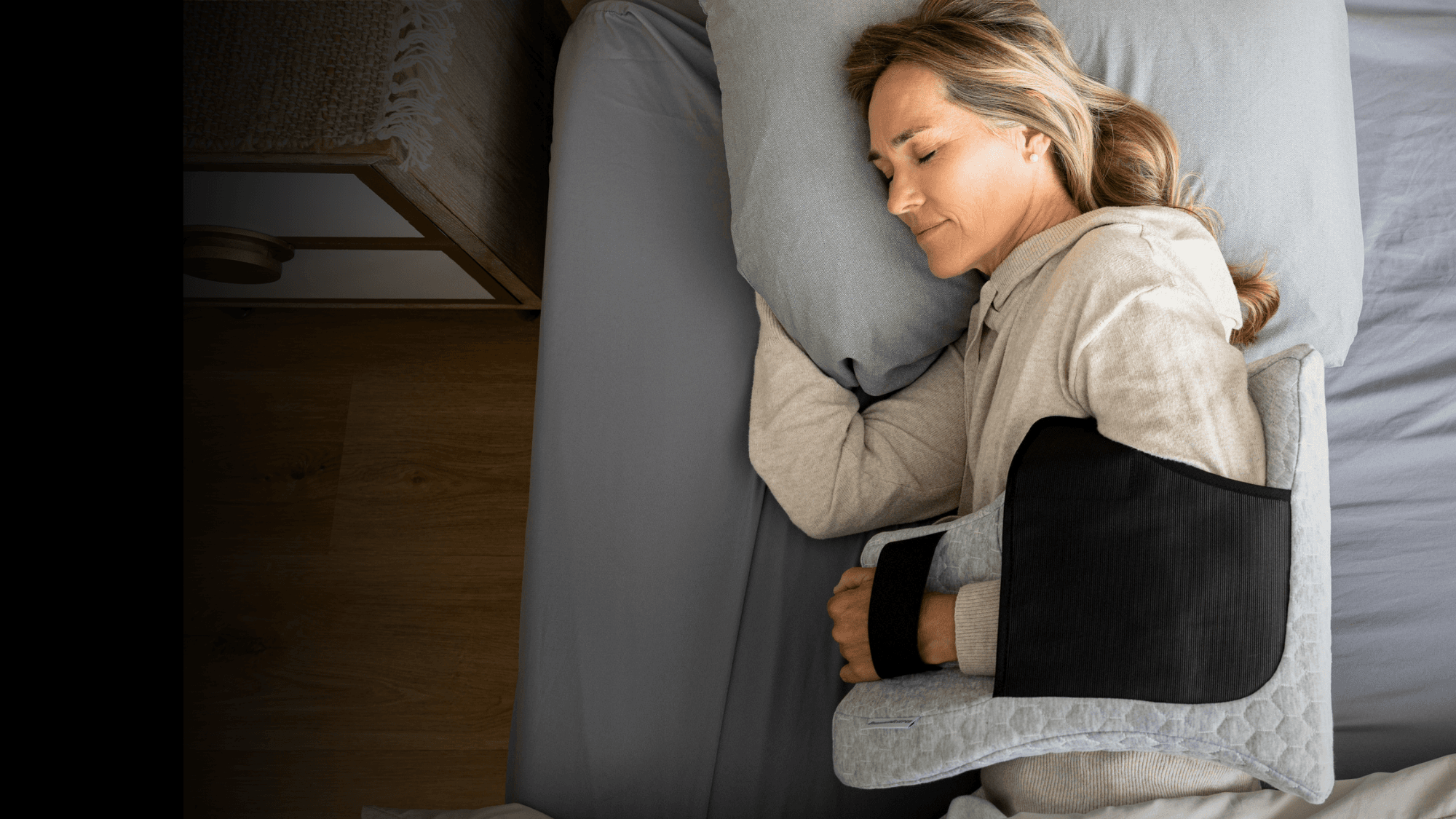
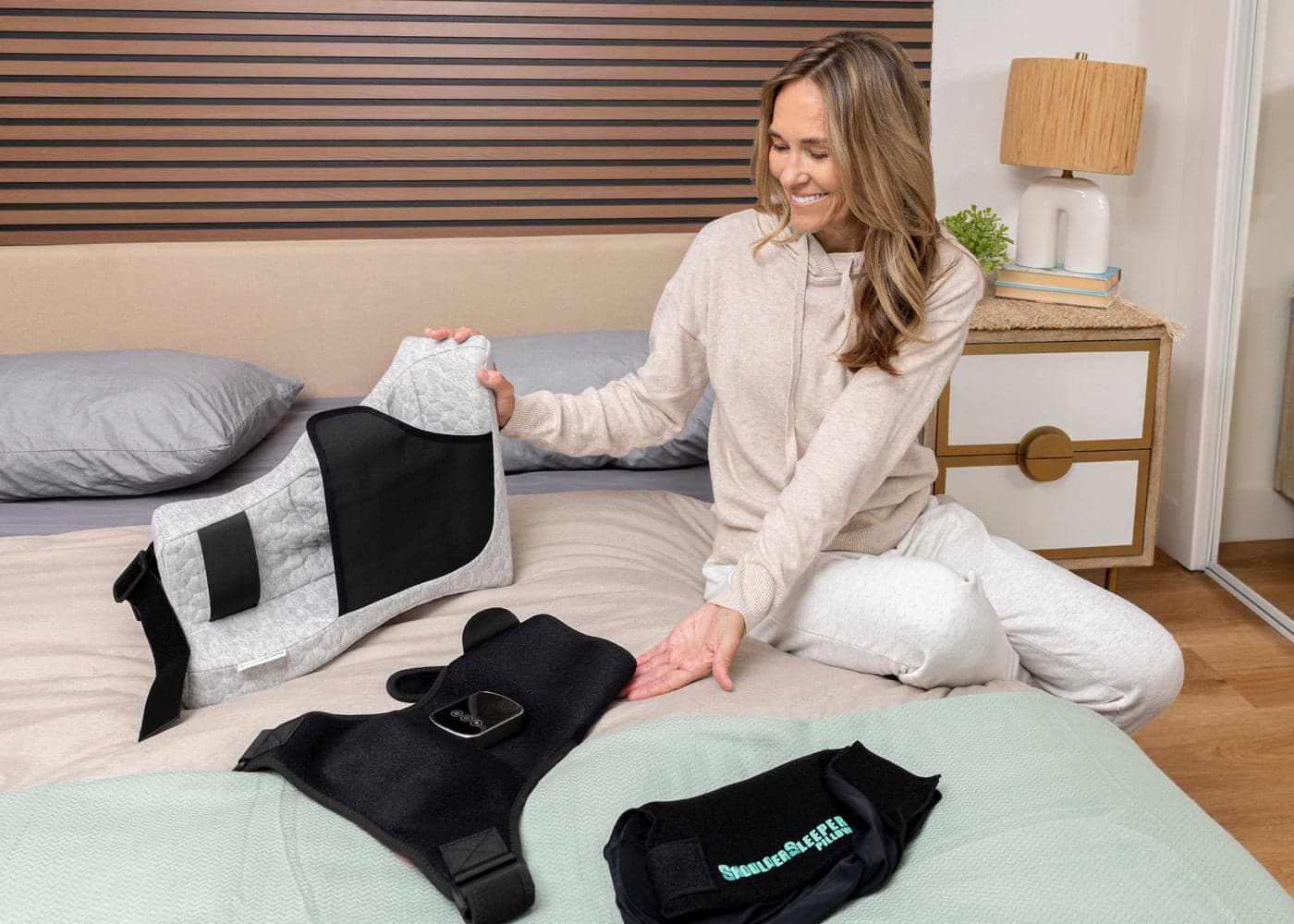
This is the bit that gets missed in every recliner-versus-bed argument. An incline positions your body. It does nothing for your shoulder — the arm still needs something holding it in a supported position so its weight isn't hanging off the repair, and so you don't roll onto it.
People who sleep in a recliner and still wake up every hour usually haven't solved the arm; they've only solved the angle. Support the elbow and forearm, and block the roll, and the night changes completely. We cover the full setup in our guide to sleeping after shoulder surgery.
How to decide, before your operation
- 1Ask your surgical team whether your procedure needs elevated sleeping, and for how long.
- 2Look at what you already have. A recliner in the house settles it for the first fortnight.
- 3Be honest about your bed. If getting out of it is already hard, weight the chair option higher.
- 4Price the hire for the realistic duration, not the optimistic one.
- 5Set up whichever you choose before surgery and sleep in it for a night. That test night is worth more than any comparison table.
Frequently asked questions
Do I need a recliner after shoulder surgery?
No — you need a stable incline and good arm support, which a recliner is one way to provide. If you already own one, use it. If you'd have to hire or buy, a wedge system in your own bed does the same job, costs once, and most people sleep better on it beyond the first week or two.
How long will I need to sleep upright?
Commonly the first several weeks, lowering the angle gradually as comfort allows rather than switching to flat overnight. Your surgeon's guidance and your own comfort decide it — plenty of patients keep a slight incline long after they strictly need it, because it simply hurts less.
Can I just use normal pillows?
You can try, and most people do. The problem is that unsecured pillows slide apart under your weight, so the incline collapses within an hour or two and you wake up flat. If you go this route, use the firmest pillows at the base and expect to rebuild it during the night.
How much does hiring a recliner cost in the UK?
Mobility hire firms charge weekly, usually with delivery and collection fees on top and often a minimum period. Get a quote for the full number of weeks you expect to need it — hires routinely run longer than planned, at which point buying a wedge set you keep often works out cheaper.
Is it bad to sleep in a chair for weeks?
It's not harmful for your shoulder, and lots of people do it. The common complaints are stiffness in the hips and lower back, poorer sleep quality after the first week or two, and sleeping apart from a partner. If the chair is working for you, there's no reason to move — but it's worth knowing you have alternatives if it stops working.