Preparing for Shoulder Surgery: The Complete UK Checklist
What to buy, what to move, what to cook and what to arrange — organised by how many weeks you have left. Everything the pre-op letter doesn't mention.
Updated 23 June 2026 · 11 min read
Most people prepare for shoulder surgery by booking time off work and hoping for the best. Then they get home, discover they can't open the front door with a bag in their good hand, can't wash their hair, and — worst of all — can't sleep. None of that is inevitable. Almost all of it can be solved in an afternoon, if you do it before the operation rather than one-handed and sore afterwards.
This checklist is organised the way the time actually runs down: a few weeks out, the week before, the night before, and the day itself.
2–3 weeks before: order what you'll need
Order early. Anything that arrives after your surgery date is useless in the exact week you needed it most, and returns are a nuisance when you're recovering.
Sleep setup
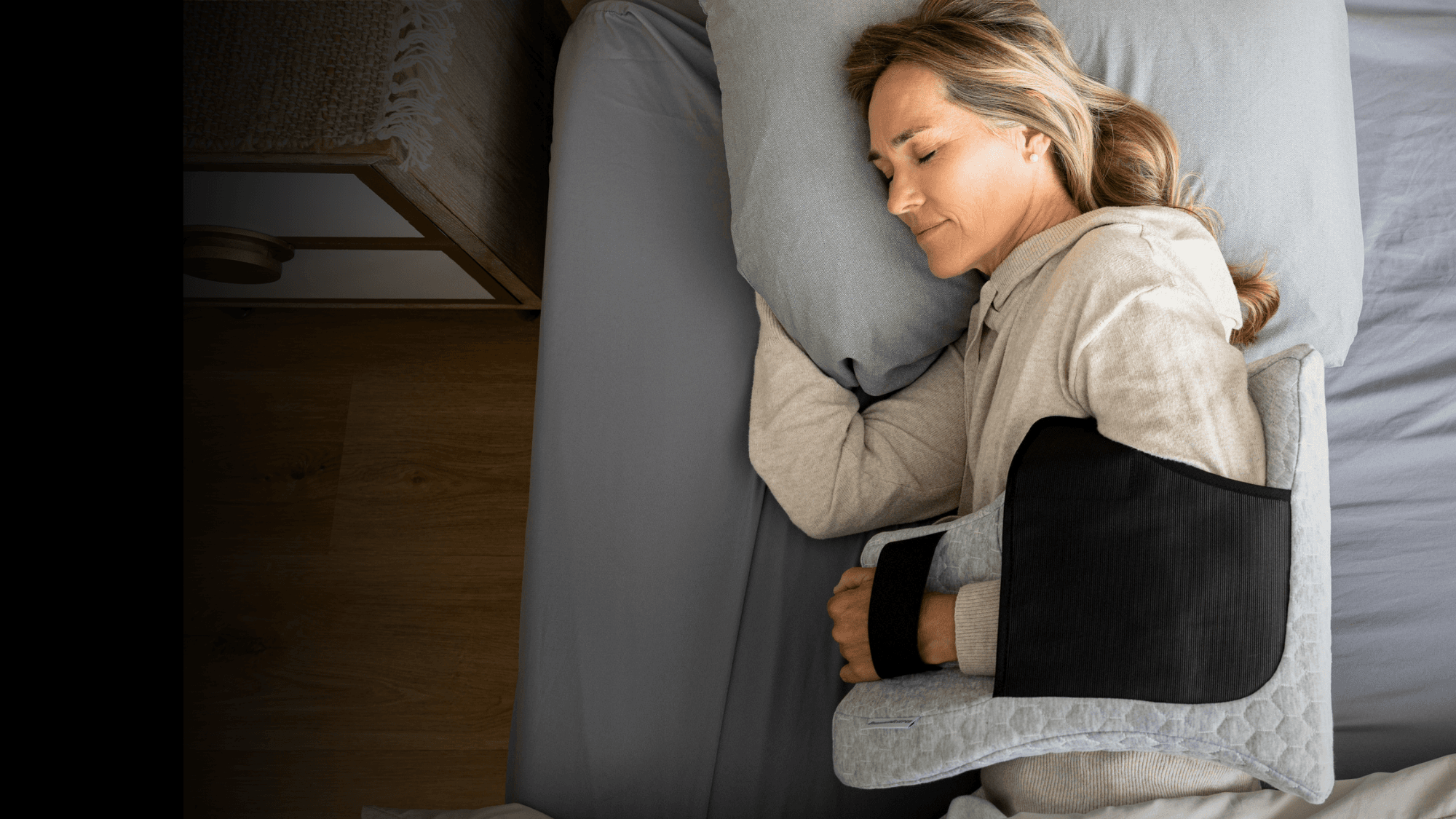
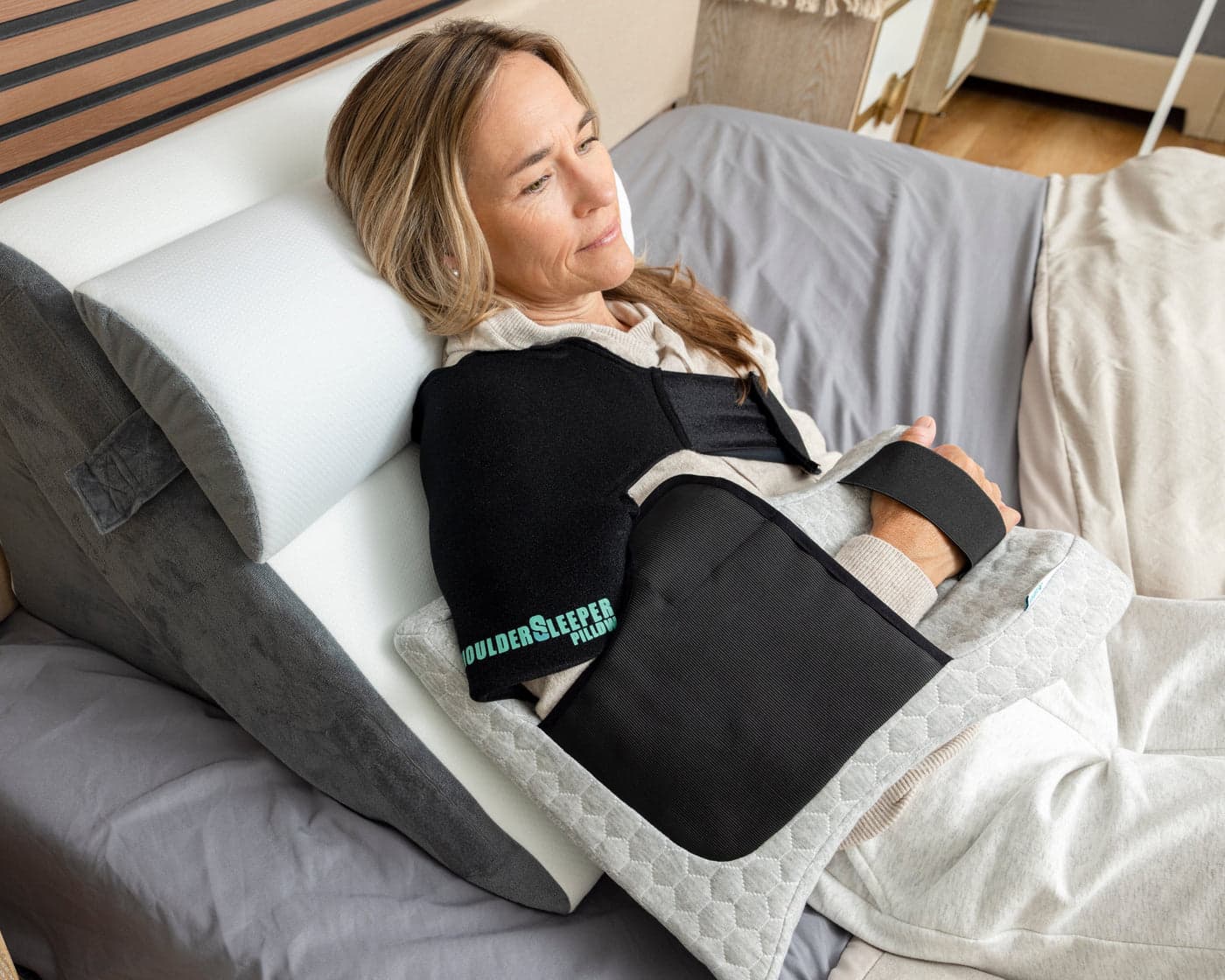
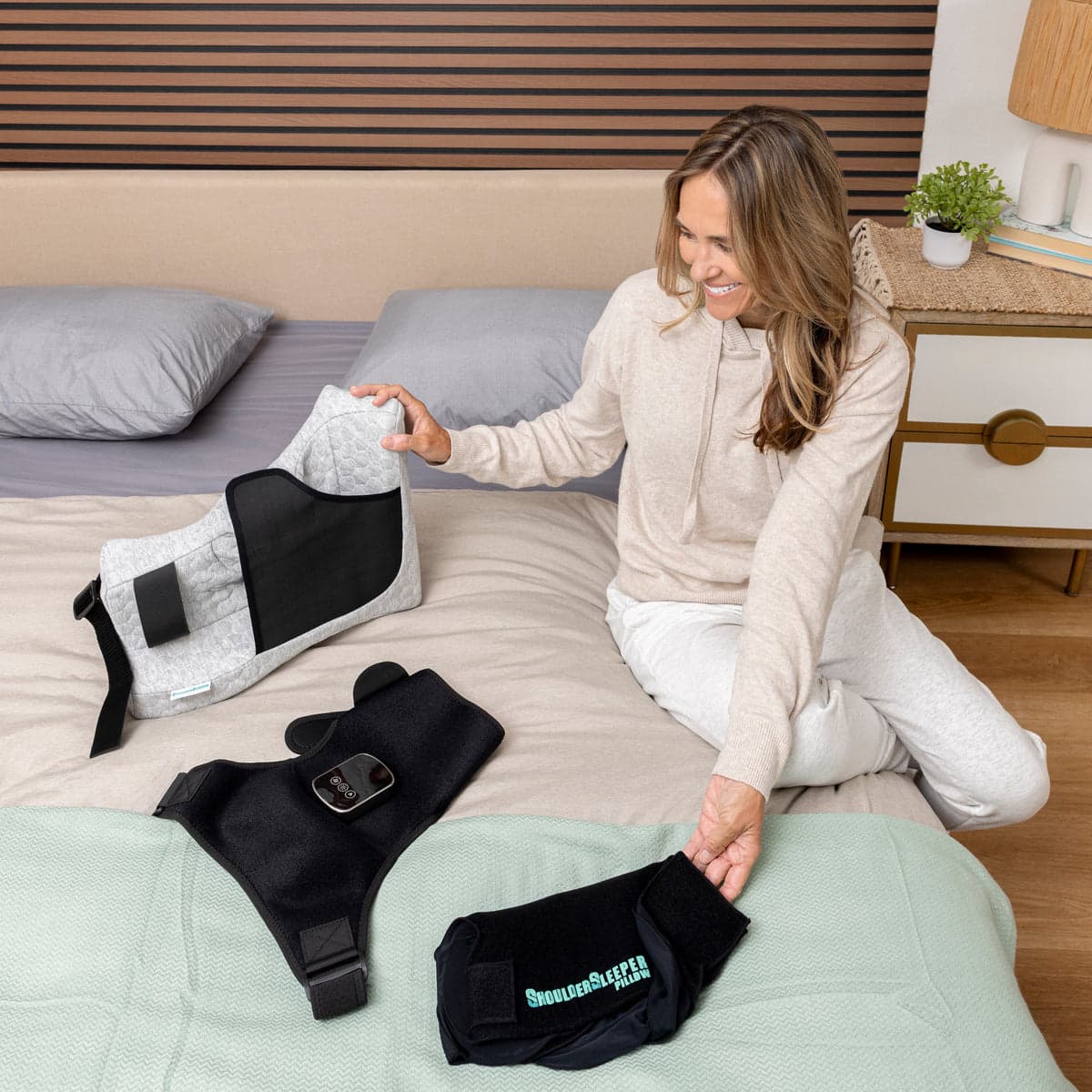
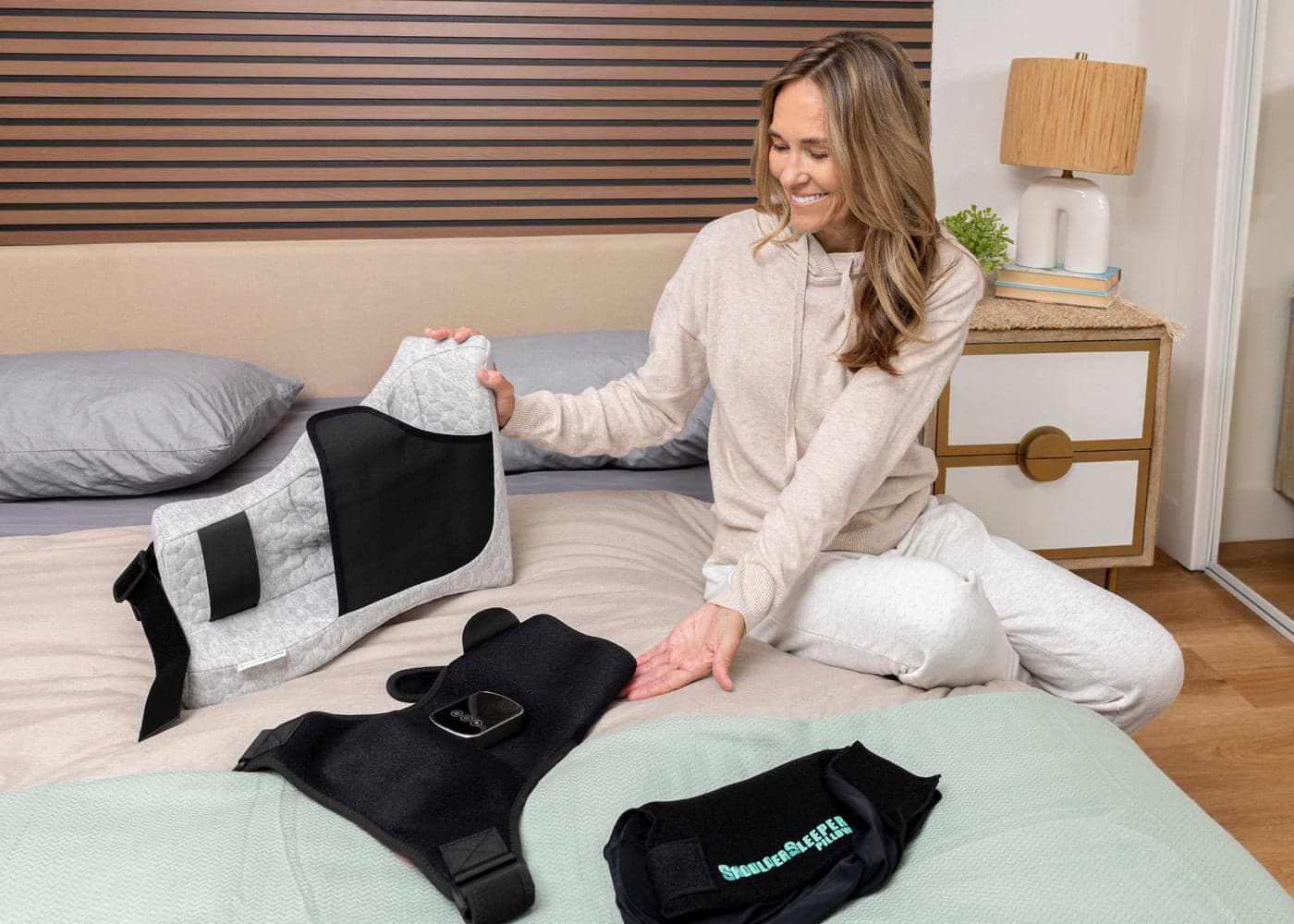
- Shoulder support for the night. A sling is designed for standing up; lying down it stops doing its job. You need something that holds the arm in position while you're asleep and stops you rolling onto the operated side.
- Elevation. Most people are more comfortable sleeping propped up for the first few weeks. A wedge cushion holds its angle far better than a stack of ordinary pillows, which slides apart within an hour.
- Ice packs — at least two, so one is always in the freezer. Shoulder-shaped wraps stay put better than a bag of peas.
- A spare pillow cover if you're using a support pillow, so you can wash one and still sleep on the other.
Clothing
- Button-front or zip-front tops. Two or three, a size larger than usual so the sleeve goes over the sling.
- Front-fastening bras or soft crop tops — reaching behind your back is out for a while.
- Elasticated waist trousers. Buttons and zips are hard one-handed.
- Slip-on shoes. Laces need two hands, and bending forward with a fresh shoulder repair is uncomfortable.
Bathroom
- A detachable shower head if you don't have one — it turns showering one-handed from a wrestling match into a manageable task.
- Long-handled sponge, pump-bottle shampoo and shower gel (squeeze bottles need two hands).
- Dry shampoo for the first days when washing your hair is awkward.
- A non-slip mat — you'll have one hand for balance, not two.
1 week before: set the house up and practise
This is the week to rehearse. Everything you learn now is something you won't have to work out at 2am with a numb arm and a nerve block wearing off.
- 1Build your sleep position and sleep in it for a night or two. Work out where the pillow sits, how the straps fasten, and whether you're more comfortable in bed propped up or in a chair. Practise fastening everything one-handed — that's how you'll be doing it.
- 2Move everything down. Anything you use daily — mugs, plates, cereal, toiletries, chargers — should live between waist and shoulder height. Reaching overhead is off the menu.
- 3Set up a bedside station. Water, phone charger, medication, tissues, a book, the TV remote, all on the side of your good arm.
- 4Cook and freeze. Batch a week of meals in single portions. Chopping, lifting a full pan and draining pasta are all two-handed jobs.
- 5Do the big cleaning and laundry now. Bedding especially — changing a duvet cover one-handed is genuinely impossible.
- 6Sort your work paperwork. Tell your employer your dates and ask about sick pay; your GP can issue a fit note if you'll be off more than seven days.
At your pre-operative assessment: what to ask
Most UK hospitals run a pre-operative assessment a week or two before surgery — checks on your health, medication, bloods, and instructions about fasting. It's also your best chance to ask the practical questions nobody volunteers answers to. Take this list:
- How long will I be in the sling, day and night? This determines almost everything else about your first six weeks.
- How should I sleep? Propped up? Can I use a support pillow? Can I take the sling off in bed?
- When does physiotherapy start, and is it already booked? Referral timing varies enormously between trusts.
- When can I shower, and how do I keep the wound dry?
- What painkillers will I go home with, and for how long? This affects driving and work.
- When can I realistically drive and return to my kind of work?
The night before: make it foolproof
- Freeze your ice packs. All of them.
- Make the bed and build the sleep setup so you can get straight into it when you come home.
- Lay out tomorrow's clothes — loose, front-fastening, easy shoes.
- Charge everything and put chargers on your good-arm side.
- Confirm your lift both ways, and who's staying with you the first night.
- Follow your fasting instructions exactly — operations get cancelled over this.
- Prepare a small bag: ID, medication list, loose top, phone charger, and something to read.
Coming home: the first 48 hours
You cannot drive yourself home after a general anaesthetic, and you shouldn't be alone for the first night. Arrange both in advance — hospitals will often delay discharge if you can't confirm someone is collecting you.
- Expect the nerve block, if you had one, to wear off after several hours — often overnight. Start regular pain relief before it does, rather than chasing the pain afterwards.
- Ice regularly in the first days, following your team's instructions on timing.
- Get into your sleep position early in the evening rather than at midnight — the first night is much easier when you're not improvising while exhausted.
- Keep the arm supported even when sitting up: a cushion under the elbow takes the pull off the shoulder.
The printable version
We'll email you a one-page version of this checklist along with our free guide, Preparing for Shoulder Surgery — print it, tick it off, take the questions to your pre-op appointment. Request the guide here.
Frequently asked questions
What should I buy before shoulder surgery?
The short list: night-time shoulder support and elevation for sleeping, two or more ice packs, button- or zip-front tops a size up, front-fastening bras, elasticated trousers, slip-on shoes, a detachable shower head, long-handled sponge, and pump-bottle toiletries. Everything else can be improvised; those cannot, easily.
How long will I need someone at home with me?
Plan for someone to stay the first night at minimum. Most people manage alone within a few days for basics but still need help with washing hair, changing bedding, cooking and shopping for the first week or two. Ask your surgical team what they expect for your specific procedure.
What clothes work with a sling?
Anything that opens at the front. Button or zip tops one size larger than usual so the fabric fits over the sling, front-fastening bras or soft crop tops, elasticated waists, and slip-on shoes. The rule of dressing is: operated arm goes in first, and comes out last.
Do I really need to prepare my bedroom?
It's the part people most often regret skipping. You'll spend more time in that room than anywhere else for a fortnight, and the position your arm sleeps in matters for both comfort and protecting the repair. Setting it up in advance means you come home to a bed that already works instead of building one at midnight.
Can I drive myself home after surgery?
No. You must not drive after a general anaesthetic — arrange a lift, and expect to be off driving for weeks rather than days. See our guide on driving after shoulder surgery for the UK rules on insurance and DVLA notification.